Green Economy Coalition

Green Economy Coalition

Prosperity for all within one planet limits

GoDocument download centre
  • Find out who we areThe people behind this coalition
  • Find out what we doRio+20, national dialogues and updates
  • The Big Picture
  • Knowledge centreArticles by experts on green economy issues
  • Your Green Economy
Home / know how / social justice / Civil society demand limits and wellbeing for 'green growth'

Civil society demand limits and wellbeing for 'green growth'

By Kimbowa Richard - Uganda Coalition – December, 2012

The OECD is committed to catalysing green growth and are working hard to accelerate the transition. But where do people and environmental limits fit into their version of 'green growth'? Kimbowa Richard reports back from Paris.

OECD

Many economists and policy makers now advocate a fundamental shift towards ‘green growth’ as the new, qualitatively-different growth paradigm, based on enhanced material/resource/energy efficiency and drastic changes in the energy mix. But challengers say it is a reductionist approach that needs to look at broader issues. But a number of global initiatives and discussions on advancing green growth are already underway targeting rich, middle income and developing countries alike.

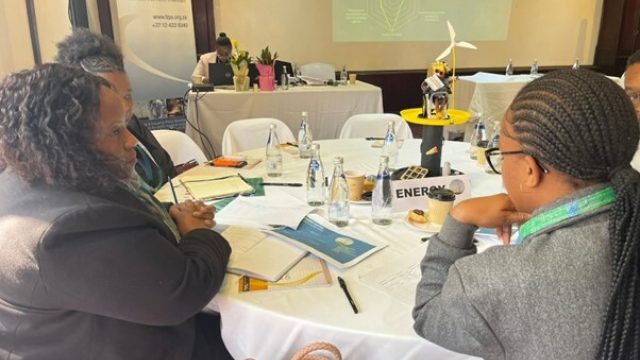
The Green Growth and Sustainable Development (GG-SD) Forum is a new initiative by the Organisation for Economic Cooperation and Development (OECD) aimed at providing a dedicated space for multi-disciplinary dialogue on green growth and sustainable development. This year’s event focused on ‘Encouraging the Efficient and Sustainable Use of Natural Resources: Policy Instruments and Social Acceptability. It took place November 23, 2012 at the OECD Headquarters in Paris and brought together experts from different policy fields and disciplines working in these areas.

  • Why Green growth?

According to OECD, green growth means fostering economic growth and development, while ensuring that natural resource assets continue to provide the resources and environmental services on which our well-being relies. Green growth can therefore open up new sources of growth through incentives for greater efficiency in use of natural resources and natural assets, open up opportunities for innovation, spurred by policies and framework conditions that allow for new ways of creating value and addressing environmental problems, creation of new markets by stimulating demand for green technologies, good and services; boosting investor confidence through greater predictability and continuity around how governments deal with major environmental issues; and securing a more balanced macroeconomic conditions, reduced resource price volatility and supporting fiscal consolidation

According to OECD, the global economic crisis convinced many countries that a different kind of economic growth is needed. In response, many governments are putting in place measures aimed at a green recovery. Together with innovation, going green can be a long-term driver for economic growth, through, for example, investing in renewable energy and improved efficiency in the use of energy and materials.

  • Green growth: A reductionist approach?

According to the Food and Climate Change Network, “Green growth” may work well in creating new growth impulses with reduced environmental load and facilitating related technological and structural change. But growth, technological, population-expansion and governance constraints as well as some key systemic issues cast a very long shadow on the “green growth” hopes. One should not deceive oneself into believing that such evolutionary (and often reductionist) approach will be sufficient to cope with the complexities of climate change. It may rather give much false hope and excuses to do nothing really fundamental that can bring about a U-turn of global GHG emissions.

Hence, the Food and Climate Change Network cautions on the need to realize that the required transformation goes beyond innovation and structural changes to include democratization of the economy and cultural change. Climate change calls into question the global equality of opportunity for prosperity (i.e. ecological justice and development space) and is thus a huge developmental challenge for the South and a question of life and death for some developing countries (who increasingly resist the framing of climate protection versus equity).

  • Green growth: Address deprivation and manage trends in Africa

During the Green Growth and Sustainable Development (GG-SD) Forum 2012, Frank Sperling (Chief Climate Change Specialist) from the Africa Development Bank noted that there is still scepticism whenever green growth discussions take place in Africa, due to the perception that it will constrain growth by creating conditionality.

He noted that Africa’s ecological footprint is increasing, coupled with many pressing development needs including addressing energy access, water and sanitation and issues around urbanization. Moreover the continent is vulnerable to climate change, which is compounding local environmental challenges that affects land, water, fisheries and livelihoods.

Frank notes that on one side, green growth in Africa means addressing deprivation (uneven economic growth, lack of energy access, lack of access to markets, lack of education, air and water pollution, depletion of natural resources and land degradation. On the other side, is the need to manage trends including the rapid population growth; urbanization; globalization, economic volatility abs shifting consumption patterns; and disaster risk and climate change.

Frank concluded that the level of intervention will require both programmatic (country/regional) as well as project level. For programmatic level, there is need for high level vision / buy-in with Development Plans / Country level roadmaps as possible entry points. Project level interventions require upfront options analysis and cross-sectoral approach and skillset; as well as focus on enhancing efficiency, sustainability and resilience of project interventions. Key green growth focal areas that will need to be tailored to national circumstances include provision of sustainable infrastructure, efficient / sustainable management of natural assets, and building resilience of livelihoods and economic sectors.

  • Civil society call for inclusive green growth processes, focus on environmental limits and wellbeing

Ten Civil Society Organisations were represented at the GG-SD Forum: Caribbean Natural Resources Institute, Friends of the Earth Germany, Global Footprint Network, Green Economy Coalition, Institute for European Environmental Policy, Uganda Coalition for Sustainable Development, Vitae Civilis Institute, WWF Europe, WWF Indonesia, and WWF Zambia

On behalf of these civil society representatives, Aron Belinky, from Vitae Civilis Institute and Green Economy Coalition, highlighted the importance of an inclusive process, environmental limits and wellbeing.

With regard to an inclusive process, CSOs asked the OECD and all Governments to make explicit opportunities for effective civil society engagement in green economy, green growth and related processes. Stakeholder engagement and societal buy-in are fundamental for such processes, and goes beyond participation in meetings, but as helping civil society become equal partners for development and implementation.

‘We ask specifically that in future versions of this Forum civil society representatives are given an equal opportunity to participate in the stakeholder engagement process and also to contribute with their own presentations on green economy perspectives’, the statement emphasized.

On environmental limits, CSOs want green growth processes to acknowledge environmental limits and to actively pursue policies that improve natural systems. They added that while current inequalities between and within countries makes the case for economic development, we must accept the fact that there are environmental limits. Public policies, governance and economic frameworks must acknowledge this, steering action so we can actively improve the state of our natural systems.

On wellbeing CSOs want green growth to be explicit in its ambitions for societal development and poverty eradication taking into full account the institutional and contextual analysis, importantly in respect of land and resource tenure, among others. Therefore they asked OECD & Governments to have policies on wellbeing and link that to the process of developing Sustainable Development Goals (SDGs).

‘Though there are  still serious gaps in the models, indicators and strategies on what value green growth makes to societal development today’s presentations,  this lack of agreed methodologies (as evidenced in the forum presentations) should not constrain OECD and nation states making clear their ambitions to use green growth to explicitly secure societal development and,  on-going, to further define improvements on how it does this’, the CSO statement concluded.


This article originally appeared on 'Realising a Green Economy: A view from the South'.

  • social justice
  • enviornmental limits
  • green growth
  • justice
  • planetary boundaries
  • poverty
Subscribe to our monthly newsletter for updates on the latest activities »

Let's stay together

Facebook twitter Youtube Flickr Linkedin

NEW: Greater Mekong dialogue

New background paper

Public private regional dialogue to explore
green growth opportunities in the Greater Mekong

Read more »

Themes

  • Financial systems
  • Governance and measurement
  • Green economic sectors
  • Investing in people
  • Natural systems

Editor's pick

Rio 2012: Possible pathway to a green economy?

Earth Summit 2012

I want to draw people's attention to 2012. For some, that's all about the Olympics. But I am more interested in what will happen in Rio de Janeiro. In June 2012 government representatives from around the world will be meeting there to discuss the...

Continue reading

Glimpses of a green economy

We're not there yet, but the good news is there's already plenty of innovation underway to provide a glimpse of what's to come… Read more >>

Popular tags

energy economic sectors food transport green growth water governance natural capital social justice finance green economy natural resources
more tags

Contribute

Interested in contributing to the green economy coalition?

Get involved

About us

The green economy coalition is a global network of organisations committed to accelerating a transition to a new green inclusive economy. This site was made possible with the help of expert collaborators. For regular updates, grab our RSS feed, sign up for the monthly newsletter, or follow us on Twitter or Facebook. Read on for more about who we are...

  • What we're doing
  • National dialogues
  • Road to Rio+20
  • Newsletters
  • Your green economy
  • The big picture
  • Knowledge Centre
  • Financial systems
  • Governance & measurement
  • Green economic sectors
  • Natural world
  • Social justice
  • Contact
  • Site map
  • Login
Prosperity for all within one planet limits©2012 green economy coalition  Text is available under a creative commons licence  Site by GSBA